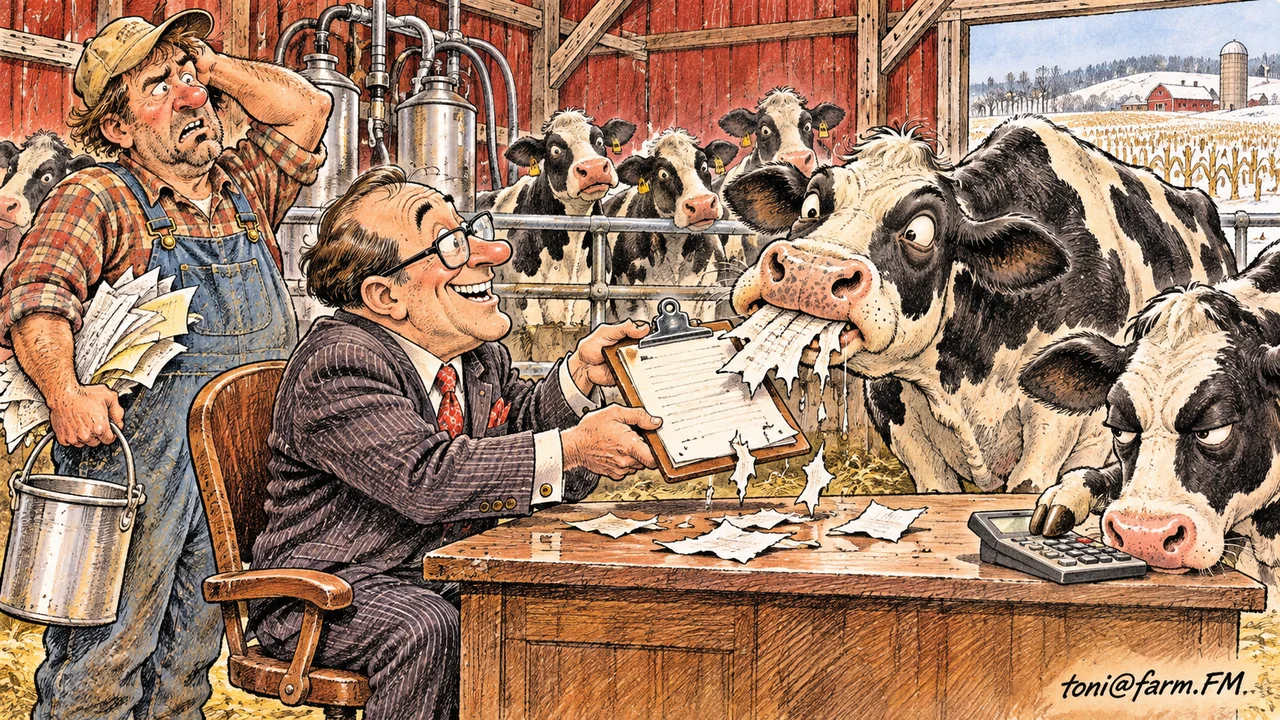
Approved, Because the Tank Isn't Repossessed Yet
LANCASTER, Wis. — A local lender has approved dairy farm loans after discovering that the applicant still owns several hundred cows, three tractors and a milk tank that has not yet been repossessed by the people who sell stainless steel.
The loan officer described the operation as "asset rich, cash nervous." The farmer described the loan officer as a man with a swivel chair who somehow gets to keep all his weekends.
Approval reportedly required a business plan, a repayment schedule and a signed statement from the cattle that they intended to remain financially productive. The Holsteins refused to initial anything until they received additional hay.
A Cow Is Collateral, Not a Co-Signer
Real dairy farm loans have specific purposes and eligibility requirements. The USDA Farm Service Agency's farm loan programs provide direct and guaranteed operating and ownership financing to eligible family-size farms that cannot obtain suitable commercial credit. Operating loans may help pay for livestock, equipment, feed and fuel; ownership loans can support land and farm improvements.
FSA states that direct-loan applicants must demonstrate repayment ability and pledge sufficient collateral. That does not mean a milk cow can guarantee a debt personally. Even a very reliable Jersey has never been known to produce a tax return, although some have produced enough paperwork to keep a veterinarian busy for weeks.
The farmer brought his financial statements to the appointment. The banker asked why the farm owned expensive equipment. The farmer explained that cows would not milk themselves and feed refused to walk into the bunks. The banker recommended reducing capital expenditures, then asked why the machinery was getting old.
The farmer took a long drink of coffee. It was the most expensive silence in the county.
The Underwriting Committee Meets the Herd
An unofficial survey of six lenders found unanimous agreement that farmers should maintain adequate liquidity, control expenses and forecast milk income conservatively. The survey was conducted by the farmer while standing in a bank lobby, and five of the six respondents were posters advertising savings accounts.
The actual loan analysis should distinguish short-term operating needs from long-lived investments, match loan terms to asset life and stress-test repayment against lower milk prices or higher feed costs. Producers should also ask about interest rates, guarantees, security requirements and prepayment provisions before signing documents thicker than the owner's manual for the manure pump.
The banker conducted a collateral inspection and was impressed by the size of the herd until one cow attempted to eat his clipboard. He noted that livestock values can change and that collateral does not magically repair a weak cash-flow projection.
At closing, the farmer asked whether the lender could refinance his exhaustion over 30 years. The banker said that product was unavailable but would be pleased to discuss an equipment loan.
The cows returned to producing milk, the bank returned to producing interest and the farmer returned to doing both of their jobs before breakfast.
Editorial note: The banker, farm and survey are comedic; the linked FSA program requirements are factual. https://farm.fm/?p=41040

Comments
Post a Comment