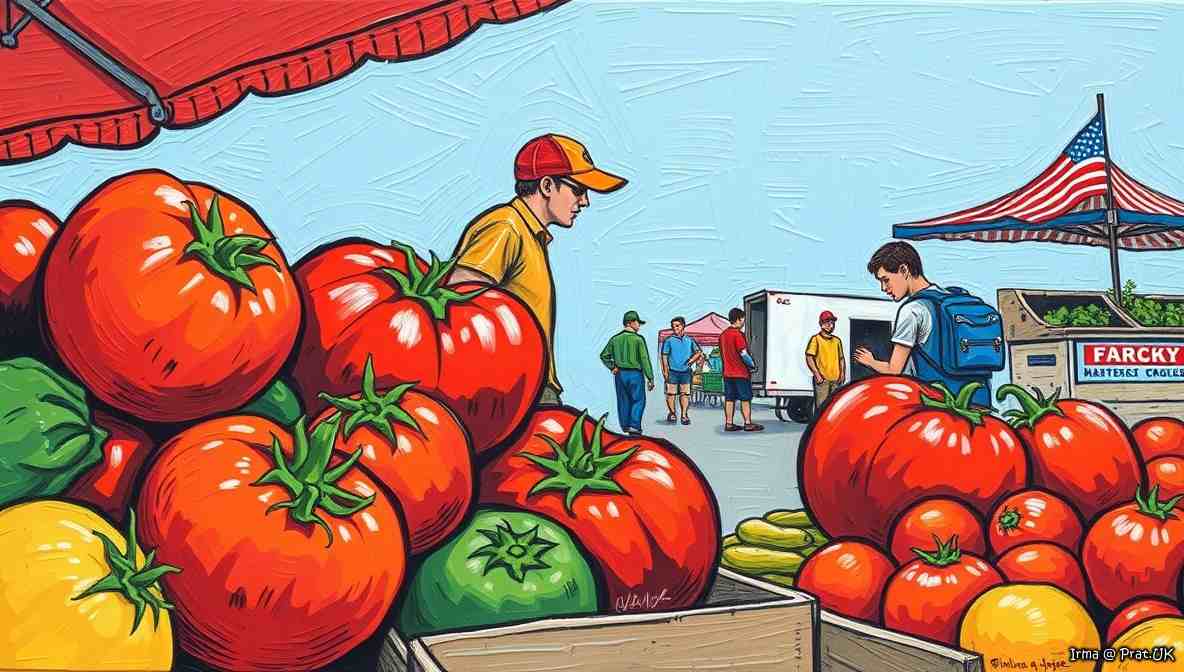
Americans Spend $84 on Farmers Market Tomatoes to Feel Emotionally Superior to Grocery Stores
Nation Continues Performing Agriculture Cosplay on Weekends as Heirloom Vegetables Achieve Status Formerly Reserved for College Degrees and Sports Cars
- Farmers markets now operate somewhere between grocery stores and outdoor philosophy seminars.
- Americans willingly pay luxury prices for vegetables if chalkboard signs look artisanal enough.
- The phrase "locally sourced" has achieved mystical powers over otherwise rational consumers.
- Somewhere in Brooklyn, a man is discussing tomato acidity like fine wine at a tasting.
- Organic kale now carries more cultural status than several college degrees combined.
Nation Continues Performing Agriculture Cosplay on Weekends
PORTLAND — Consumer analysts confirmed Friday that Americans increasingly spend astonishing amounts of money at farmers markets largely because buying handmade jam and heirloom tomatoes creates temporary emotional relief from modern capitalism. The trend reportedly reached new heights after one Seattle woman paid $84 for produce, handmade soap, and "heritage mushroom vinegar" before proudly describing the trip as "simple living." She arrived in a $78,000 SUV. The SUV has a heated steering wheel. The mushroom vinegar does not.
USDA Agricultural Marketing Service data shows the number of registered farmers markets in the U.S. has grown from approximately 1,700 in 1994 to more than 8,600 today — a 400% increase that tracks almost perfectly with the rise of sourdough bread, artisanal cheese boards, and the collective desire to feel like a 19th century Vermont farmer on Saturday mornings.
Farmers Markets Become Outdoor Spiritual Experiences With Acceptable Prices for People Who Own Vitamix Blenders
Experts say modern farmers markets offer consumers more than groceries. Shoppers increasingly seek community, authenticity, and permission to believe civilization still contains human warmth. According to USDA Economic Research Service studies on local food marketing, consumers cite connection to producers and perceived quality as primary motivators for farmers market shopping — motivations that are entirely genuine and are also being monetized aggressively by someone named Eli who learned about "regenerative soil philosophy" from a podcast.
Researchers say customers enjoy hearing words like "small batch," "sustainable," and "wood-fired." Nobody fully understands the vinegar, but that is not the point. The point is that the vinegar has a story, and the story involves a family farm in Vermont, and that story is worth $18 per 4-oz bottle whether the family farm exists or not.
Americans Quietly Paying Rent-Level Prices for Vegetables With Artisanal Dirt Still on Them
Critics argue many urban markets increasingly resemble luxury lifestyle events disguised as agriculture. One Los Angeles market recently offered $11 strawberries, $14 almond milk, and "mindfully harvested turnips." A customer described the turnips as "emotionally grounding." Economists later confirmed they were normal turnips that had been placed near a handwritten sign. The sign said "Slow-Grown." The turnips had no comment.
Consumer Reports' analysis of organic food pricing found that organic and specialty produce at farmers markets can cost 20-50% more than supermarket equivalents — a premium that buys demonstrable quality in some cases and beautifully designed chalkboard signage in others. Consumers are apparently satisfied with either outcome, which is why behavioral economists find farmers markets riveting.
What the Funny People Are Saying
"Nothing says simple living like paying twelve dollars for bread next to a guy playing banjo ironically." — Bill Burr
"Farmers markets are where people cosplay as pioneers with Apple Watches." — Jerry Seinfeld
"You ever notice nobody at farmers markets looks financially relaxed?" — Ali Wong
Vendors Continue Winning Through Vibes and Wooden Crates
Market sellers admit presentation matters enormously. Ordinary carrots become premium products once displayed beside wooden crates, handwritten signs, and someone named Eli discussing regenerative soil philosophy. One vendor reportedly sold out of potatoes after describing them as "ancestral root experiences." Shoppers bought them without further questions, which is either evidence of excellent marketing or a society that has simply reached the point where it wants to be told a good story about its starch.
Marketing research consistently shows that narrative context dramatically increases perceived product value — which explains why the same tomato costs $2.49 at Kroger and $7.00 when it comes with a small paragraph about the farmer's grandmother.
Shoppers Increasingly Obsessed With Authenticity in a World That Sells Authenticity as a Product
Sociologists say urban Americans crave experiences that feel tangible amid digital exhaustion and corporate sameness. Professor Savannah Lee from The University of California, Berkeley explained that artisanal shopping creates "ritualized comfort." "When people buy handcrafted honey," she noted, "they briefly imagine society might survive." She added that this is a perfectly reasonable coping mechanism and that the honey is often excellent, which means the whole thing is simultaneously absurd and genuinely worthwhile, which is the most human sentence available.
Entire Weekend Economy Running on Fancy Tomatoes and Brief Optimism
Despite the prices, Americans continue flocking to weekend markets because the atmosphere offers rare emotional pleasures: fresh air, friendly conversations, and vegetables not wrapped in twelve layers of plastic. These are not trivial benefits. The plastic alone is worth escaping.
At press time, one Brooklyn man reportedly spent twenty minutes discussing peach texture with a vendor before buying nothing except lavender lemonade and existential reassurance. The lemonade cost $6. The reassurance was complimentary and temporary, which is the standard farmers market package.
This article is American satire produced through a collaboration between the world's oldest tenured professor and a philosophy major turned dairy farmer — the latter of whom has strong opinions about what qualifies as heirloom produce and has not been consulted. Bohiney.com practices American satirical journalism in the grand tradition of people who know the price of everything and the value of a good tomato. No heritage mushroom vinegar was harmed. Auf Wiedersehen, amigo! https://bohiney.com/farmers-market-tomatoes/


Comments
Post a Comment