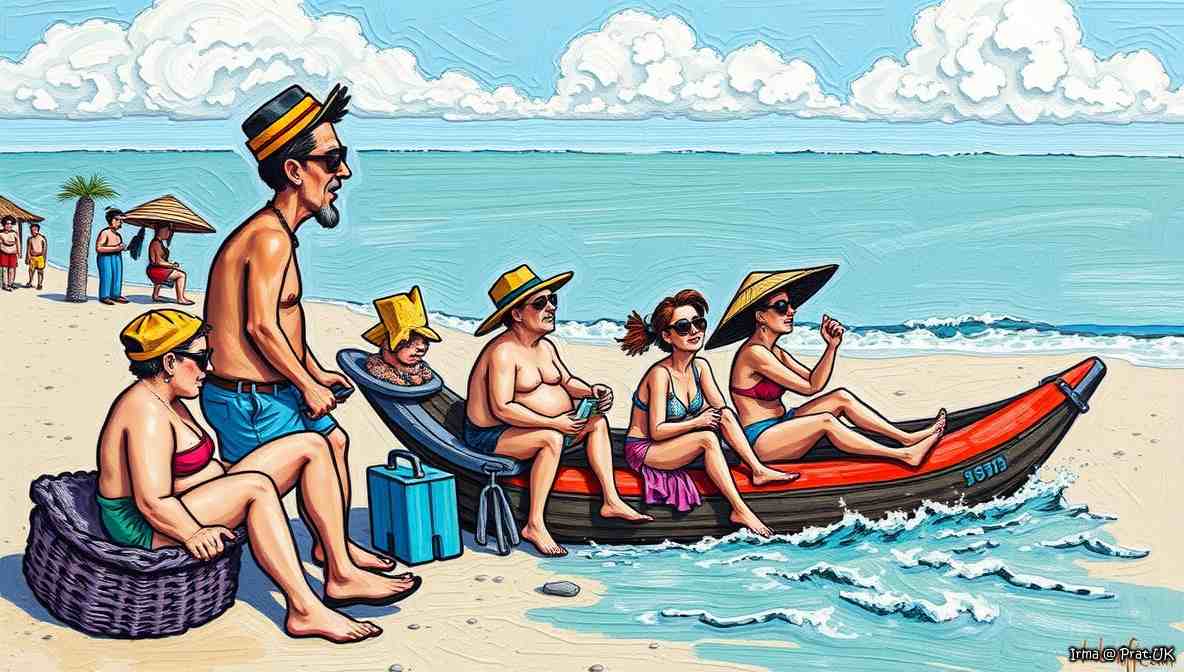
Americans Now Need Recovery Days After the Vacation That Was Supposed to Recover Them From Work
Nation Quietly Exhausted by Leisure Itself as Tourists Return Sunburned, Financially Damaged, and in Need of a Smaller Supplemental Vacation
- Vacations increasingly function as expensive logistical marathons.
- Americans spend more energy planning relaxation than relaxing.
- Modern tourism combines financial stress with airport dehydration.
- Everyone returns from vacation needing another smaller vacation.
- Somewhere in Orlando, a father is sweating through a Disney map while calculating debt.
Nation Quietly Exhausted by Leisure Itself
ORLANDO — Travel experts confirmed this week that millions of Americans now require "post-vacation recovery periods" after returning from trips originally intended to reduce stress and restore mental health. The phenomenon reportedly intensified after one California family returned from a seven-day vacation needing two therapy sessions, three naps, and "a temporary moratorium on sunscreen discussions." Witnesses described the family as "sunburned, financially damaged, and emotionally hollow." They are already being asked about next year's trip.
Expedia Group travel research confirms that travel demand remains among the highest on record despite mounting cost pressures, suggesting Americans are either optimistic about vacations or have simply accepted that suffering in a tropical location beats suffering at a desk. The data does not indicate which is more accurate.
Vacation Planning Evolves Into Tactical Warfare
Researchers say modern travel increasingly involves overwhelming layers of booking apps, flight alerts, hotel comparisons, restaurant reservations, parking logistics, and one cousin demanding "authentic experiences." The authentic experience cousin has not specified what counts as authentic, which means the entire family is now visiting a ruin in 97-degree heat on someone's recommendation from a travel blog monetized by hotel partnerships.
Experts believe Americans now treat vacations less like relaxation and more like "mandatory memory production" — a phrase that captures precisely what happens when someone spends more time photographing a sunset than experiencing it. The American Psychological Association notes that pre-travel anxiety is increasingly common, with planning stress sometimes exceeding the actual stress relief the trip was meant to provide. The math, as always, works out against you.
Airports Continue Emotionally Crushing Humanity One Gate at a Time
Much of the stress reportedly begins before travelers even reach destinations. One Atlanta resident described her recent vacation start as "three hours of security lines followed by a $19 airport wrap and spiritual decline." The $19 wrap contained lettuce, ambient sadness, and a texture she described as "cardboard's depressed cousin."
Travelers increasingly arrive at resorts already exhausted from flight delays, gate changes, lost luggage, and hearing someone FaceTime loudly near Gate 23. Bureau of Transportation Statistics data shows flight delays affect roughly 20% of domestic departures — meaning one in five Americans starts their vacation with immediate proof that things could absolutely go worse.
What the Funny People Are Saying
"Vacations used to mean rest. Now they mean passwords, boarding zones, and heat rash." — Jerry Seinfeld
"You spend six grand to become tired somewhere tropical." — Bill Burr
"Everybody comes back from vacation needing electrolytes and emotional counseling." — Ali Wong
Theme Parks Reach Full Psychological Extraction Mode
Nowhere is the exhaustion more intense than at major tourist attractions. Disney visitors reportedly walk an average of several miles through extreme heat while negotiating Lightning Lane pricing systems resembling stock market derivatives. Disney's Lightning Lane system offers multiple tiers of line-skipping passes at prices that escalate based on the park's crowd level — a system so efficient at extracting money that economists study it the way biologists study apex predators.
One father from Ohio admitted he spent most of his vacation "rage-refreshing ride reservations." He described the experience as "capitalism with fireworks." The fireworks were genuinely beautiful and cost $14 to view from a premium viewing area he didn't know existed until the regular viewing area was already full.
Social Media Quietly Making Vacations More Stressful
Psychologists also blame online culture for transforming travel into performative achievement. Vacationers increasingly feel pressure to capture perfect photos, document every meal, and appear spiritually fulfilled beside waterfalls. Professor Ingrid Johansson from New York University explained that travelers now experience "curated relaxation anxiety." "People aren't just resting anymore," she noted. "They're producing vacation content." The content gets 47 likes. The vacation cost $6,800. The algorithm does not care about this ratio.
Research published in Psychology Today suggests that documenting experiences on social media can reduce present-moment enjoyment — meaning the photo of the beach is making the beach worse, which is a sentence that would have been incomprehensible to anyone born before 1990.
Americans Continue Taking Vacations Anyway, Bless Them
Despite everything, citizens remain committed to travel because staying home often means staring at laundry and emails until morale collapses entirely. The vacation, even broken, remains preferable to the alternative. There is something deeply admirable about a species that will willingly drive three hours to an airport, pay $7 for a bottle of water past security, argue about a middle seat, and still call the whole thing "getting away from it all."
At press time, one New Jersey couple reportedly returned from Italy and immediately began researching "quiet cabin vacations with no Wi-Fi and fewer humans." The cabin costs $340 a night. It has a hot tub. The hot tub requires downloading an app.
This article is American satire produced through a collaboration between the world's oldest tenured professor and a philosophy major turned dairy farmer. No vacations were emotionally restored during production, although one editor did briefly require a recovery nap after comparing hotel parking fees in Orlando. Bohiney.com practices American satirical journalism in the tradition of people who need a vacation from planning their vacation. Auf Wiedersehen, amigo! https://bohiney.com/recovery-days-after-the-vacation/


Comments
Post a Comment