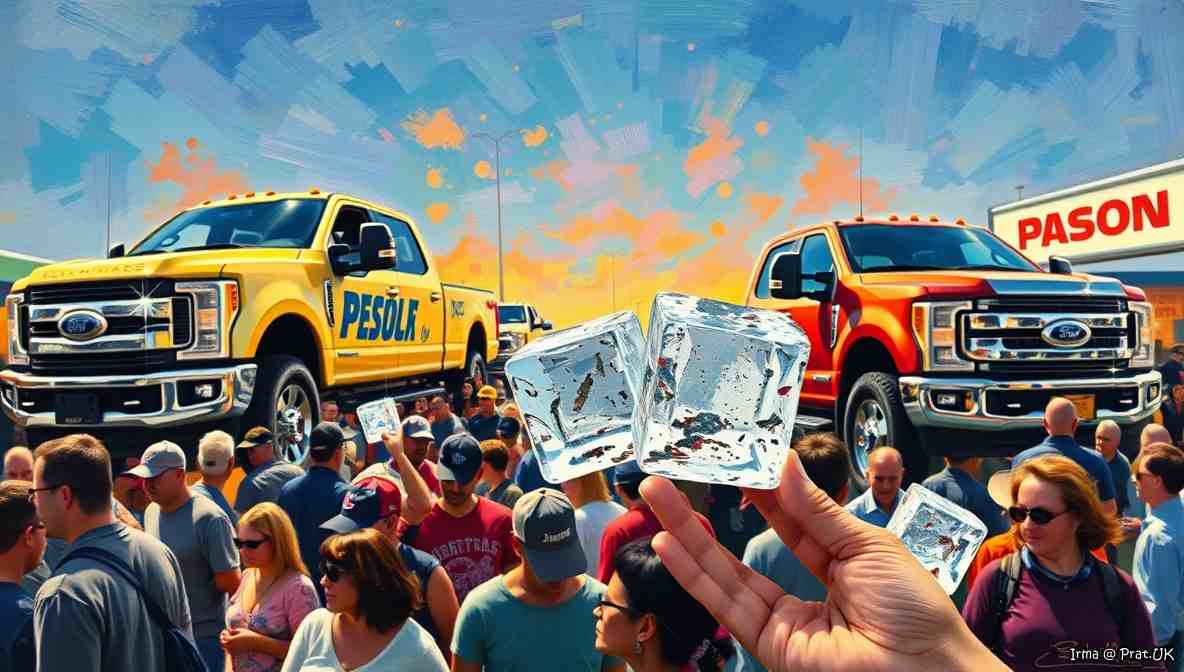
Nation Demands Lower Prices While Buying Giant Trucks and Gourmet Ice Cubes
A new poll released this week found that 87 percent of Americans are deeply concerned about the cost of living. The same week, F-150 sales hit a quarterly high, artisanal ice cube subscriptions are up 34 percent year over year, and a specialty grocer in Austin is reporting record sales on a $24 jar of honey that is described, on the label, as "spiritually sourced."
The American consumer contains multitudes. Specifically, the multitude that believes prices are too high and the multitude that will absolutely pay $18 for a cocktail if the ice is the right shape.
The Truck Paradox
No single artifact captures the American consumer contradiction more precisely than the full-size pickup truck. It is the best-selling vehicle in the country by an enormous margin, year after year, despite averaging fuel economy that becomes actively painful at current gas prices. It is purchased primarily by people who do not haul things. It is large enough to carry a small building but is generally used to carry one person to a location where they will buy something and return.
Owners of these trucks are, polling confirms, among the Americans most likely to report that gas is too expensive. They are also the Americans most likely to be sitting in a truck when they say it. The engine is still running. The cup holder holds a $9 iced coffee. The truck needs premium.
The Gourmet Ice Cube Problem
The gourmet ice cube is perhaps the purest expression of a prosperous society that has run out of ordinary things to spend money on. It is ice. It is frozen water. Its function is to be cold. It accomplishes this at an elevated price point because it is a different shape, or a different clarity, or was frozen more slowly, or came with a story about the water's origin that was printed on a card inside the box.
Americans who buy gourmet ice cubes also buy regular ice. The gourmet ice is for the drink that matters. The regular ice is for everything else. This is a distinction that would have been incomprehensible to any prior generation and is now a product category with a subscription model and a loyalty program.
What the Economists Say
Economists explain the contradiction through a concept called "asymmetric consumer response," which is the technical way of saying that people notice prices on things they have to buy and are indifferent to prices on things they want to buy. The grocery bill is an outrage. The premium subscription service is a necessity. The truck was a good deal at the time. The ice was a gift to yourself.
This is not irrational behavior. It is perfectly human behavior. It just makes the inflation data very hard to interpret, because the same household reporting distress over egg prices is also ordering a charcuterie board at a markup that would have funded a week of groceries.
Comedians Weigh In
Bill Burr has strong feelings. "We're out here angry about the price of gas while buying trucks that get eleven miles to the gallon. That's not an economy problem. That's a math problem. We did this. We specifically did this."
Jim Gaffigan noted that the gourmet food economy exists entirely alongside the grievance economy and neither notices the other. "I bought a twenty-dollar loaf of bread and then complained about inflation on the way home. The bread was good. I'm still angry about prices. Both are true."
Nate Bargatze was gentler. "We're not hypocrites. We're optimists. We think things should cost less AND we deserve nice things. That's not a contradiction. That's the American Dream. Always has been."
A Portrait of the Modern Consumer
The modern American consumer is a person who checks the unit price on pasta, buys the expensive pasta, complains about pasta prices, and then orders a pasta dish at a restaurant for $28 because they read a review that said the pasta was good. They are not confused. They are making individual calculations about individual moments. The cumulative picture looks contradictory from the outside. From the inside, each decision made complete sense at the time.
This is who is demanding lower prices. They mean it. They also have a gourmet ice cube subscription and will not be canceling it.
Consumer spending data in the United States has shown a persistent pattern of complaint about prices alongside continued willingness to spend on discretionary and premium goods. Inflation has remained a top voter concern throughout 2025 and 2026, yet truck and SUV sales remain strong, the premium grocery sector continues to grow, and luxury experience spending has been resilient despite headline inflation. Economists note that the contradiction reflects both genuine economic stress among lower-income households and the spending power of upper-middle-class consumers who feel squeezed on essentials but continue splurging on wants.
Auf Wiedersehen, amigo! https://bohiney.com/nation-demands-lower-prices/


Comments
Post a Comment